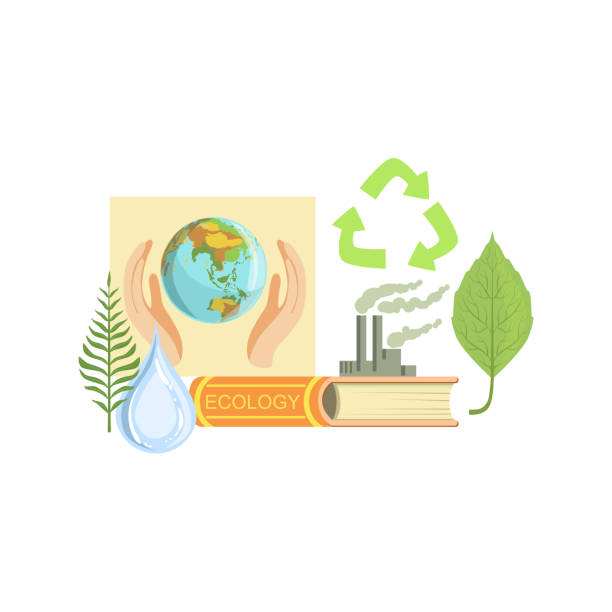
Climate change has emerged as one of the most pressing global challenges of the 21st century. Rising temperatures, unpredictable weather patterns, loss of biodiversity, and increasing environmental degradation have highlighted the urgent need for informed and responsible action. While technological solutions and policy reforms play a critical role, long-term and sustainable change depends significantly on education—particularly environmental education.
The importance of Environmental Education lies in its ability to shape awareness, values, and behaviors from an early age. By equipping students with knowledge about ecological systems, human impact on the environment, and sustainable practices, environmental education empowers future generations to actively participate in climate change mitigation and adaptation efforts.
Understanding Environmental Education
Environmental education is a structured learning process that helps individuals understand the natural world, recognize human dependence on ecosystems, and develop skills to address environmental challenges responsibly. It extends beyond textbook learning to include critical thinking, ethical reasoning, and practical action.
Key components of environmental education include:
- Awareness of environmental issues
- Understanding ecological interdependence
- Development of sustainable habits
- Encouragement of civic responsibility
Schools play a pivotal role in introducing these concepts early, particularly in formative years when attitudes and behaviors are still developing.
Why Environmental Education Is Essential in the Context of Climate Change
Building Climate Awareness and Scientific Understanding
One of the primary objectives of environmental education is to help students understand the science behind climate change. This includes concepts such as greenhouse gas emissions, global warming, deforestation, and renewable energy.
A strong academic foundation allows students to distinguish between scientifically validated information and misinformation. Institutions with a structured curriculum—such as many best ICSE schools in Whitefield—integrate environmental science topics in ways that are age-appropriate and conceptually sound.
Encouraging Responsible Environmental Behaviour
Knowledge alone is insufficient without corresponding action. Environmental education emphasizes responsible behavior, such as:
- Reducing waste and conserving resources
- Practicing energy efficiency
- Respecting biodiversity
When students understand the consequences of everyday actions, they are more likely to adopt sustainable lifestyles that contribute to climate change mitigation.
Environmental Education and Sustainable Development
Environmental education is closely linked to the broader concept of sustainable development, which seeks to balance environmental protection, economic growth, and social equity. Students exposed to sustainability concepts learn to evaluate decisions through an environmental lens.
Many academically progressive institutions, including best ICSE schools in Kadugodi, emphasize sustainability as a cross-disciplinary theme rather than limiting it to science subjects alone. This integrated approach helps students see environmental responsibility as a shared societal goal.
Role of Schools in Promoting Environmental Literacy
Curriculum Integration
Effective environmental education is embedded within the curriculum rather than treated as an optional topic. Subjects such as science, geography, social studies, and even language learning can reinforce environmental concepts.
Internationally aligned institutions, including best IGCSE schools in Kadugodi, often adopt inquiry-based learning models that encourage students to explore real-world environmental challenges through research and discussion.
Experiential and Project-Based Learning
Hands-on learning strengthens environmental understanding. Activities such as:
- Tree-planting initiatives
- Waste segregation projects
- School gardens and composting
- Climate awareness campaigns
allow students to apply theoretical knowledge in meaningful ways. These experiences foster a sense of responsibility and agency.
Developing Critical Thinking and Problem-Solving Skills
Environmental education encourages students to analyze complex systems and interconnected problems. Climate change is not a single-issue challenge—it involves science, economics, politics, and ethics.
Through debates, case studies, and collaborative projects, students learn to:
- Evaluate multiple perspectives
- Propose realistic solutions
- Understand long-term consequences
Such skills are essential for future leaders, policymakers, and innovators working toward climate resilience.
Environmental Education as a Tool for Civic Engagement
Educated individuals are more likely to engage in environmental advocacy and community initiatives. Environmental education helps students understand their role as informed citizens who can influence change through responsible choices and participation in democratic processes.
Schools that focus on holistic development—such as schools in Whitefield Kadugodi—often emphasize community engagement alongside academic learning, reinforcing the idea that environmental responsibility extends beyond the classroom.
Long-Term Impact of Environmental Education
The long-term benefits of environmental education include:
- Environmentally conscious decision-making
- Increased participation in sustainability initiatives
- Greater support for climate-positive policies
- Enhanced resilience to environmental challenges
By instilling environmental values early, education systems contribute to a more informed and proactive society capable of addressing climate change effectively.
Challenges in Implementing Environmental Education
Despite its importance, environmental education faces challenges such as:
- Limited curriculum time
- Lack of teacher training
- Insufficient practical resources
Addressing these challenges requires institutional commitment, teacher development programs, and alignment with national and international educational frameworks.
Conclusion
The importance of Environmental Education in combating climate change cannot be overstated. As climate challenges intensify, the need for environmentally literate, responsible, and proactive individuals becomes increasingly urgent. Schools serve as critical platforms for cultivating this awareness and shaping behaviors that support sustainability.
By integrating environmental education into curricula, encouraging experiential learning, and fostering critical thinking, educational institutions help prepare students to face climate-related challenges with knowledge, responsibility, and confidence.
FAQs
1. Why is environmental education important for students?
It helps students understand environmental issues and develop sustainable habits early in life.
2. How does environmental education help combat climate change?
It promotes awareness, responsible behavior, and informed decision-making related to climate action.
3. At what age should environmental education begin?
Environmental education can begin in early primary years with age-appropriate concepts.
4. Is environmental education limited to science subjects?
No, it is interdisciplinary and can be integrated across multiple subjects.
5. How can schools strengthen environmental education programs?
By combining curriculum integration, teacher training, and hands-on learning activities.