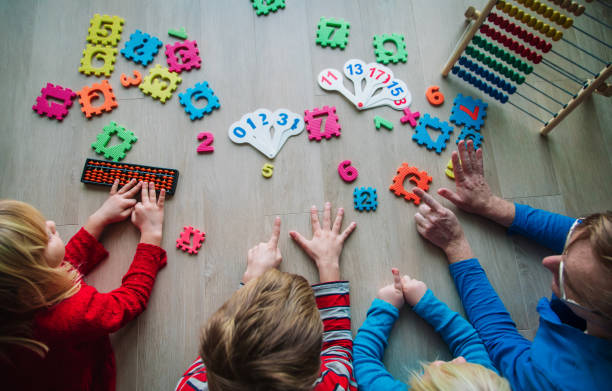
Early numeracy skills form the backbone of a child’s academic development, and one such crucial skill is backward counting. While forward counting introduces children to numbers, backward counting deepens their understanding of number order, sequencing, and subtraction readiness. For many children, counting backward from 100 can initially seem complex unless introduced through engaging and structured methods.
This article offers practical, age-appropriate strategies, fun games, and learning techniques to help children master backward counting from 100 with confidence. It is designed to support parents and educators seeking reliable academic guidance rather than rote-based approaches.
Why Backward Counting Is Important for Children
Backward counting supports several foundational mathematical and cognitive skills:
- Strengthens number sense and sequencing
- Builds readiness for subtraction and mental math
- Enhances memory, attention span, and logical thinking
- Encourages independent problem-solving
Progressive schools that focus on early numeracy—such as reputed best schools in Whitefield—often introduce backward counting through structured play, visual learning, and real-life applications rather than memorisation.
Understanding Backward Counting from 100
Backward counting from 100 involves reciting numbers in reverse order, typically decreasing by one each time. For young learners, this requires:
- Clear understanding of forward number sequences
- Familiarity with number patterns
- Repeated exposure through guided practice
Attempting to count from 100 to 0 in one stretch can overwhelm children. Breaking the learning process into smaller ranges ensures better retention and confidence.
Step-by-Step Method to Teach Backward Counting
Begin with Smaller Number Sets
Children should first become comfortable counting backward from:
- 10 to 0
- 20 to 0
- 50 to 0
Only after mastering these stages should they attempt backward counting from 100. This scaffolded approach aligns with best practices followed in many academically structured environments, including ICSE schools Whitefield.
Use Visual Number Tools
Number charts, flashcards, and wall displays allow children to visually track descending numbers. Visual reinforcement helps them understand how numbers relate to one another rather than learning them in isolation.
Fun Tricks That Make Backward Counting Easy
Songs and Rhymes
Rhythm and repetition significantly improve memory. Countdown songs and number rhymes allow children to internalize backward counting patterns naturally and joyfully.
Movement-Based Counting
Incorporating physical activity helps kinesthetic learners. Examples include:
- Jumping backward while counting down
- Walking down steps while saying numbers aloud
- Passing a ball while counting in reverse
Many Cambridge schools in Whitefield use movement-based learning to strengthen early mathematical understanding.
Games That Reinforce Backward Counting
Countdown Games
Games such as pretend rocket launches or race-to-zero challenges encourage children to count backward without fear of making mistakes.
Board and Floor Games
Creating a number path on the floor using chalk or mats allows children to physically move backward while calling out numbers. This reinforces both sequencing and spatial awareness.
Practising Backward Counting in Daily Life
Backward counting becomes easier when integrated into everyday routines:
- Counting down before bedtime
- Counting backward while packing toys
- Counting steps while walking downstairs
These informal learning moments reduce pressure and help children associate numbers with real-world experiences.
Common Difficulties and How to Support Children
Skipping Numbers
If children skip numbers, revisit smaller ranges and reinforce forward counting first.
Loss of Interest
Switch to games, storytelling, or role-play instead of repetitive drills.
Number Confusion
Visual aids and frequent practice help children distinguish similar-looking numbers.
Experienced educators, including those in best IGCSE schools in Whitefield, emphasize conceptual clarity and patience over speed or perfection.
Role of Schools in Building Strong Numeracy Foundations
Schools play a vital role in shaping how children perceive mathematics. High-quality institutions focus on:
- Concept-based learning rather than rote memorization
- Interactive, play-driven math instruction
- Continuous observation and individual support
When children are taught backward counting using thoughtful methods, they transition more smoothly into subtraction, mental arithmetic, and higher-level math skills.
Conclusion
Mastering backward counting from 100 is a significant step in a child’s mathematical development. With the right balance of structure, play, and real-life practice, children can learn this skill confidently and enjoyably. Parents and educators who focus on understanding rather than repetition help build strong numerical foundations that support long-term academic success.
FAQs
1. At what age should children learn backward counting from 100?
Most children begin learning it between ages 5 and 7, after mastering forward counting.
2. Why is backward counting more challenging than forward counting?
It requires stronger sequencing skills and memory recall.
3. How often should children practice backward counting?
Short, daily practice sessions are more effective than long, infrequent ones.
4. Is backward counting necessary before learning subtraction?
Yes, it supports conceptual understanding of subtraction and number reduction.
5. How long does it take for a child to learn backward counting from 100?
With consistent practice, most children become comfortable within a few weeks.