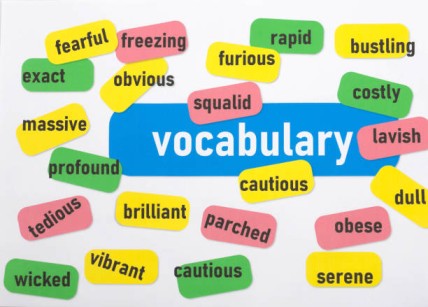
Learn how to improve vocabulary with simple daily habits.

A strong vocabulary is the foundation of effective communication, confident expression, and academic success. For students, learning new words not only improves reading and writing skills but also enhances comprehension across all subjects. Parents often wonder how to improve vocabulary without making learning feel like a chore—and the good news is that vocabulary building can be both fun and effortless when woven into daily routines.

From simple conversations at home to engaging games and reading habits, small daily actions can make a big difference. In this blog, we explore practical, enjoyable, and parent-friendly ways to help children expand their vocabulary naturally and confidently.

Why Vocabulary Development Matters for Students

Vocabulary plays a crucial role in how students understand the world and express their thoughts. When children have a rich vocabulary, they are better equipped to articulate ideas, understand complex concepts, and perform well academically.

Benefits of a Strong Vocabulary

  • Improves reading comprehension
  • Enhances writing and speaking skills
  • Boosts confidence in communication
  • Supports better academic performance
  • Encourages critical thinking

Students studying in language-rich environments, such as the best international schools in kadugodi, often benefit from structured vocabulary exposure that parents can reinforce at home.

Start with Everyday Conversations

One of the simplest ways to understand how to improve vocabulary is to focus on everyday communication. Daily conversations provide countless opportunities to introduce new words naturally.

How Parents Can Help

  • Use varied and descriptive language while speaking
  • Explain new words during conversations
  • Encourage children to ask questions about unfamiliar terms
  • Avoid oversimplifying language unnecessarily

When children hear new words used in context, they are more likely to remember and use them correctly.

Make Reading a Daily Habit

Reading is one of the most effective methods for vocabulary development. Exposure to different genres introduces students to new words, phrases, and sentence structures.

Tips to Build Vocabulary Through Reading

  • Encourage reading for at least 20 minutes daily
  • Offer age-appropriate books and stories
  • Discuss the story and new words after reading
  • Re-read favorite books to reinforce learning

Schools that promote strong literacy programs, such as the best international schools in whitefield, often emphasize daily reading to strengthen language skills.

Use Word Games and Fun Activities

Learning how to improve vocabulary doesn’t have to be boring. Games and interactive activities make the process enjoyable and memorable.

Fun Vocabulary-Building Activities

  • Word puzzles and crosswords
  • Scrabble or word board games
  • Word-of-the-day challenges
  • Vocabulary flashcards
  • Online word games and quizzes

These activities help students associate learning with enjoyment, making them more eager to expand their vocabulary.

Encourage Writing in Creative Ways

Writing helps reinforce vocabulary by encouraging students to actively use new words.

Creative Writing Ideas

  • Maintain a daily journal
  • Write short stories or poems
  • Describe daily experiences using new words
  • Create comic strips with dialogue

When students experiment with words in writing, they gain confidence and clarity in language usage.

Learn New Words Through Media

Educational media can be a powerful tool for vocabulary building when used wisely.

Effective Media-Based Learning

  • Watch educational videos or documentaries
  • Listen to audiobooks or podcasts
  • Discuss new words heard during shows
  • Encourage subtitles while watching programs

This approach exposes students to contextual vocabulary in an engaging format.

Create a Word-Friendly Home Environment

A language-rich home environment significantly supports vocabulary growth.

Simple Ideas for Parents

  • Display new words on a board or chart
  • Encourage children to use new words in sentences
  • Celebrate learning rather than perfection
  • Avoid correcting mistakes harshly

Children feel more confident experimenting with new words when they feel supported.

Practice Vocabulary Through Daily Routines

Daily activities offer endless opportunities to introduce new words.

Examples of Vocabulary in Daily Life

  • Cooking: ingredients, measurements, actions
  • Travel: directions, landmarks, descriptions
  • Nature walks: plants, animals, weather terms
  • Household tasks: tools, processes, organization

Making vocabulary part of routine life helps children understand how words function in real-world contexts.

Encourage Peer Interaction and Group Learning

Children often learn new words through interaction with peers.

Benefits of Social Learning

  • Exposure to diverse vocabulary
  • Improved communication skills
  • Increased confidence in speaking
  • Enhanced listening abilities

Schools with interactive learning environments, including the best schools in kadugodi, encourage discussion-based learning that supports vocabulary development.

Be Consistent and Patient

Vocabulary building is a gradual process. Parents should focus on consistency rather than speed.

Key Points to Remember

  • Avoid overwhelming children with too many words
  • Reinforce learning through repetition
  • Encourage curiosity and questions
  • Appreciate progress, no matter how small

Consistency helps children retain and apply new vocabulary naturally.

How Vocabulary Growth Supports Academic Success

A strong vocabulary benefits all subjects—not just language arts.

Academic Advantages

  • Better understanding of textbooks
  • Improved exam performance
  • Clearer expression of ideas
  • Stronger comprehension in subjects like science and social studies

Students with a good vocabulary foundation find learning more accessible and enjoyable.

Conclusion

Understanding how to improve vocabulary doesn’t require complex methods or intense study sessions. Simple, fun, and consistent daily habits can help students build strong language skills naturally. Through reading, conversation, games, writing, and supportive environments, parents can play a vital role in enriching their child’s vocabulary.

By making vocabulary learning enjoyable and stress-free, children develop confidence, curiosity, and communication skills that support lifelong learning and academic success.

FAQs

1. What is the best way to improve vocabulary daily?
Daily reading, conversations, and word games are effective ways to improve vocabulary naturally.

2. How long does it take to see improvement in vocabulary?
With consistent practice, noticeable improvement can be seen within a few weeks.

3. Can vocabulary be improved without memorization?
Yes. Learning words through context, reading, and conversation is more effective than rote memorization.

4. How can parents help children use new words confidently?
Encouragement, practice in conversations, and positive reinforcement help children gain confidence.

5. Does a strong vocabulary help in academics?
Absolutely. A strong vocabulary improves comprehension, communication, and overall academic performance.


Looking for admissions near Kadugodi?

Share

ENQUIRE NOW

    [dscf7captcha dscf7captcha-893]

    Examinations

    PNC Cognitio School, in its full capacity as a K-12 Cambridge International School also serves as an exam center for private candidates from India and around the globe. We offer a wide-range of subject choices from IGCSE, O Level and International AS/A Level to our private candidates. We cater to them through all three available series for Cambridge examinations: March, June and November making it altogether easier for students to easily manage their exam routines.

    PNC Cognitio School in its sole aim to provide an illuminated pathway for students to reach universities worldwide is an official PSAT, SAT and Advanced Placement Test Centre (#: 63838) in association with the College Board, US. 

    We currently offer all the exam series for SAT, PSAT and AP as offered by the College Board allowing students to seamlessly attempt exams at their own comfortable time and apply to universities with ease. From 2023, students will benefit from digital SAT with better exam experiences and faster results all aided by the advanced systems right here at PNC Cognitio.

    With all of the facilities available at PNC Cognitio School, we strive to be a comprehensive package to students, handing over their most powerful passport to quality education around the globe without any hassle in accessibility. 

    New Grade Familiarization Week

    Any new beginning requires mental preparedness , readiness and handling new information by the mind. Kids are no exception to this as they more dependent on parents to assist them in their decisions and actions. With the kids, it is pivotal to make them feel at home to help them ease in to the new surroundings. New Grade Familiarization week is an important stride towards this aspect. This new initiative started with the academic year 2019 -20. These five days are carefully planned and power packed with academic and co-curricular activities to help children start their new academic year on a high note.

    The onboarding process is designed in benefit of new to children build their understanding between newly found friends and teachers. All of them get to know the school culture and get familiar with their environment. Such a program with a caring vision ensures they step into their actual academic periods totally prepared and excited to begin the year long journey. All Grade students were able to start their learning pathway by bonding with teachers and getting valuable insights into their learning objectives for the new academic year. Grade 9 Students for example were able to lay hands on various tools and designs relevant to design and Implementation. It was such an endearing and pleasant sight to watch all young learners get used to the campus and enjoy the program.

    PNC School Culture and values imbibe children with immense moral insights and the program is just providing them a taste of what they are going to experience yearlong within the campus along with their mentors.

    After School Programs

    PNC’s spacious school, a community learning resource, will continue to offer a rich selection of extracurricular activities designed to enhance students’ all-around development. This array of activities is offered during the week and on the weekend. The school strives to earn an excellent State, National, and International reputation for its inter-school sports activities and tournaments.

    Regular sports activities include Swimming, Cricket, Basketball, Skating, Football and more.

    Support classes in a variety of subject areas will also be a key feature of after-school activities to ensure that any student who requires additional guidance will be able to obtain it. Upcoming activities such as Drama, Arts, Environmental Club, and Music Club will be the new features of the after-school programme. A full range of other accredited skills-based courses designed to develop various future skills will be rolled out as part of the “Skills of the Future Cognition”  development plan, which could include Leadership, ICT, Entrepreneurship, Communication, Gen X Skills, and many more.

    Applying learning and developing professional skills are key to our young people’s successful futures.

    Child's Learning Partners

    Education Professionals – Our highly qualified and motivated teachers have been carefully selected for their teaching excellence and ability to actively engage students in the learning process. We implement an ongoing programme of workshops and professional development sessions, often conducted by noted educationists in around the world, to ensure that our teachers are up to date with the latest developments in educational techniques and methods.

    The Senior Leadership Team and a team of Subject Leaders are well experienced and are complemented by professional teachers to meet the needs of our student population.

    Partnership with Parents – Parents play an important role in the learning journey of the child at school. At PNC we provide varied platforms for parents to interact with the students thus giving them the real time application of the subjects. Through a regular communication system – written and data reports, SMS, email, and a programme of consultation evenings – parents are regularly updated on the progress of their children and activities in the school. Parents are welcome to discuss their children’s individual progress with the concerned teacher or school Principal or any member of the Senior Leadership Team at a mutually convenient time.

    Parent Voice including a monthly forum with the Principal is conducted regularly. These meetings provide an opportunity for all our parents to voice any concerns, suggestions, or ideas they may have.

    Child Health & Safety

    The health and safety support network is made up of people such as extended family, friends, and community members who will work together in sync with the school to develop and maintain a plan that will ensure long-term safety, belonging, and well-being of our Children. A healthy mind and a healthy body are inseparable, binding upon each other for a productive life.

    The purpose of the School Safety and Health Program are:

    1. To promote a healthy lifestyle among students, by providing them with knowledge and skills that will enable them to take responsible decisions to protect their health and well-being.
    2. To build healthy eating habits through the Wholesome Healthy Lunch – The power of 5 food groups.
    3. To enhance the role of students in contributing actively and positively to the national health situation by following various initiatives at this level like – “Swach”.
    4. To ensure that School Health becomes and continues to be an integral part of the overall education program in all schools.
    5. Ensure health and well-being is a key learning area and healthy practices are key competencies to be instilled as part of our curriculum.
    6. The school has developed a safe, inclusive, and supportive environment that involves and communicates with children, young people and their parents/guardians.
    7. We encourage child and parent/guardians involvement and engagement that informs safe school operations and builds the capability of children and parents/guardians to understand their rights and responsibilities.

    Cambridge Pathway School

    Cambridge Primary starts learners on an exciting educational journey. Typically for 5 to 11-year-olds, it develops young learners who are confident, responsible, reflective, innovative, and engaged and includes an assessment that proves and improves learning. Students in this programme follow Stages 1 to 6 of the Cambridge Primary Curriculum, which continues to build on the foundations that are established in the Early Years Foundation Stage. Ongoing reviews ensure that each student’s progress and development are continuous and meet predetermined standards.

    We encourage students to think independently, use their initiative, and participate in a meaningful and active manner in the learning process. At the end of Grade 5 (Stage 6), students will prepare for the University of Cambridge Primary Checkpoint Examinations in English, Mathematics, and Science. The tests are marked in Cambridge to provide an international benchmark of learner performance. Learners receive a statement of achievement and a diagnostic feedback report. Feedback reports show how a learner has performed in relation to the curriculum, their learning group, the whole school, and against all learners who have taken tests in that series around the world.

    The core academic curriculum includes instruction in English, Mathematics, Science, Global Perspective (Social Studies & EVM) and Digital Learning. Kannada is taught to all students and caters for native and non-native speakers. In addition, the school offers French and Hindi. The overall educational experience is enhanced and supplemented with an enriched visual and performing arts programme that embraces both western and local culture as well as an excellent school sports provision.

    The Finnish Education Model

    Freedom to choose, express, explore and learn. These are the wings of the learning flight in PNCCS. Our pedagogy adaption to the world’s best education system is to prepare today’s learners for Gen-Z. As a resource school, it is our endeavour in providing an enriching learning environment for our Cognitions to learn.
    The Finnish Adaptation in our school is characterized by the understanding that a student who is happy in the classroom and is comfortable since he/she is free to learn at his own pace, will learn the knowledge that is needed. Finnish teachers have genuine pedagogical freedom, as well as autonomy to teach. Therefore, they are motivated in their day to day activities. Teachers spend approximately 400 + hours of training during a year. This includes a wide range of skills such as Subject Matter Expertise, Classroom Management, Equipping Students with 21st Century Skills, and many more.
    The Facilitators have at their disposal a range of ready-to-use materials in their classrooms. The learning labs and Research Points empower the teacher to promote experiential and active learning.
    Thus a plant rooted in good soil and environment bears fruits that sustains itself and the community. And so is every Cognition.
    Progressing in this pathway, two initiatives that shape our children’s mind is “Speakathon” and “Thoughtcast”. These learning platforms help the learners to reflect on various topics which impact them, the environment, and the community at large. Learners express, debate, and pen down their thoughts. Thus transforming them into confident individuals who can voice their opinions, accept or reflect on critical reviews and collaborate to find solutions.
    The pedagogy promotes mastery of learning through thinking routines. It is a synonym for the layers of soil. Each is different in texture and composition but all are important.