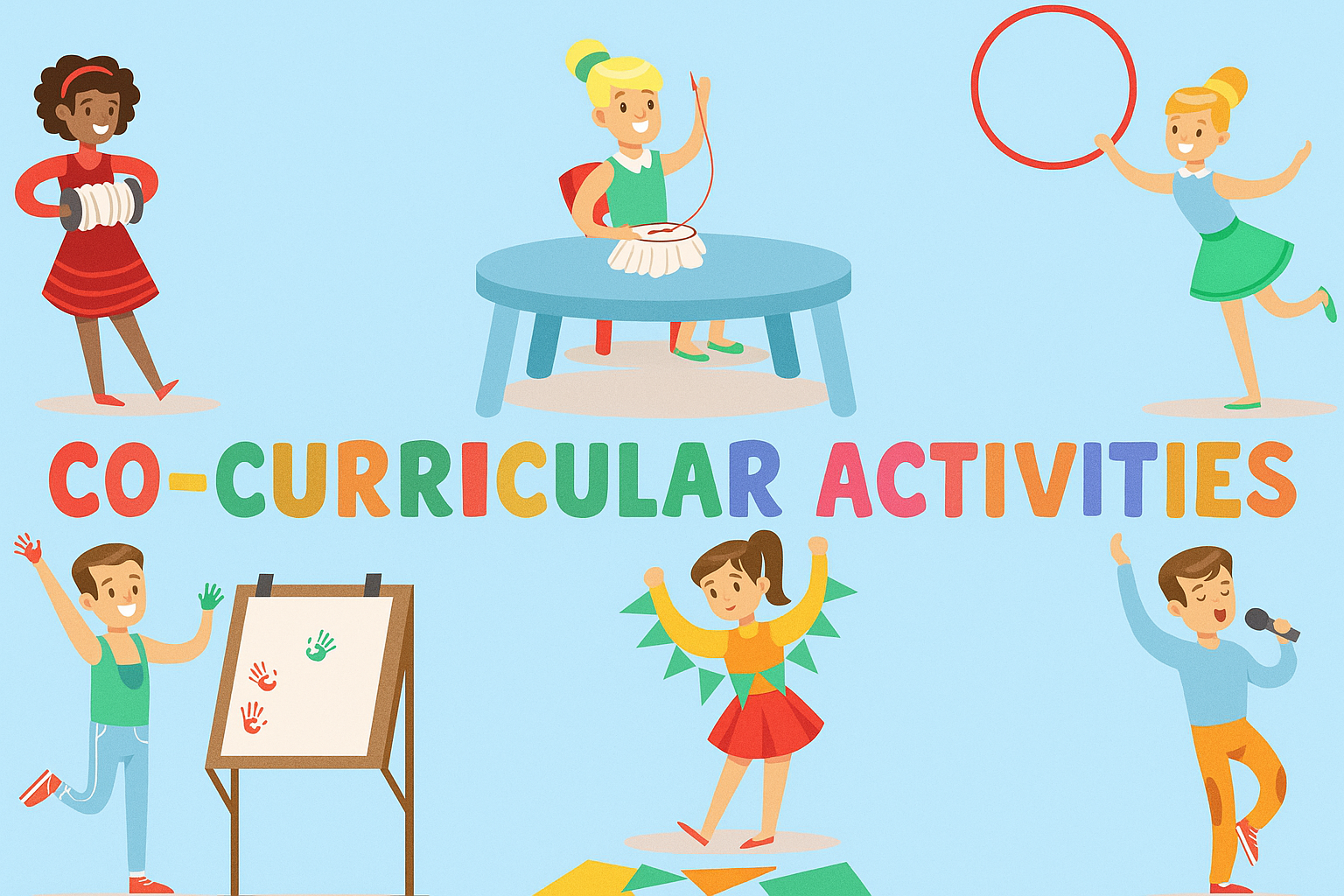
Imagine a classroom buzzing with creativity—where children build robots, paint colorful masterpieces, act out stories, and race across fields with laughter. This isn’t just play—it’s powerful learning in motion. In today’s evolving education system, co curricular activities have become essential for shaping well-rounded individuals. These activities help children explore interests, uncover talents, and develop critical life skills early on.
In forward-thinking environments like the best international schools in Whitefield, learning doesn’t stop at the last period. It flows into music rooms, playgrounds, and art corners, allowing young learners to grow beyond textbooks.
Why Co-Curricular Activities Matter in Primary Schools
1. Develop Social and Emotional Skills
Co-curricular activities allow children to interact with their peers in collaborative settings. Teamwork, empathy, communication, and leadership are all strengthened through activities like group sports, theatre, or community service clubs.
2. Encourage Creativity and Critical Thinking
Programs such as art, drama, and music stimulate creativity. They help children think outside the box and solve problems in innovative ways. These skills are crucial for future learning and adaptability.
3. Identify and Nurture Individual Talents
Not all students shine in traditional academics. Activities like dance, coding clubs, or chess can uncover hidden talents and build self-worth. Schools that support this are often known as the best IGCSE schools in Whitefield.
4. Promote Physical Health and Mental Wellbeing
Physical activities such as yoga, sports, and outdoor games are essential for a child’s health. They not only build stamina and strength but also reduce stress and improve focus.
5. Support Holistic Development
Co-curricular activities are key to developing the whole child—intellectually, physically, socially, and emotionally. This holistic approach nurtures multiple intelligences and ensures balanced growth in every learner. When schools blend academics with activities like performing arts, nature exploration, or collaborative group projects, children learn to think deeply, feel empathetically, and act responsibly. This mirrors the philosophy of holistic education and prepares students not just for exams, but for life.
Real-Life Examples of Co-Curricular Activities
Here are some popular co-curricular activities commonly offered in progressive primary schools:
- Storytelling Clubs: Enhance imagination and verbal skills. Students learn how to articulate thoughts, improve language fluency, and boost their confidence through creative narration.
- LEGO and Robotics Labs: Encourage design thinking and problem-solving. These labs introduce basic engineering principles in a fun, hands-on way.
- Art and Craft Workshops: Build fine motor skills and creativity. Children explore colors, textures, and materials while developing patience and focus.
- School Choirs and Bands: Foster rhythm, coordination, and confidence. Music groups also help build team spirit and listening skills.
- Nature Walks and Gardening Clubs: Promote environmental awareness. These activities teach responsibility and instill respect for nature.
- Junior Coding Programs: Introduce logic and programming fundamentals. They encourage sequential thinking and early digital literacy.
- Drama and Role Play: Help students explore emotions and empathy while boosting public speaking skills. Performing on stage builds courage and expression.
- Sports and Physical Education: Develop teamwork, discipline, and physical fitness. Regular participation enhances resilience and emotional regulation.
- Science Clubs and Experiments: Spark curiosity about the natural world. Kids perform simple experiments to understand cause and effect in an exciting way.
- Cultural Celebrations and Language Clubs: Promote diversity and global awareness. These programs help students appreciate different cultures and develop communication skills across languages.
These activities add depth to daily learning and spark curiosity in every child.
Link Between Learning Styles and Co-Curriculars
Every child learns differently. Some absorb information best by seeing, others by doing or hearing. Co-curricular activities cater to various learning styles, making education more inclusive and effective.
For instance:
- Visual learners benefit from art and design activities
- Auditory learners excel in music and debates
- Kinesthetic learners thrive in dance and sports
Educational Games and Informal Learning
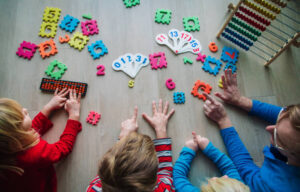
Not all learning has to be formal. Educational games used in co-curricular programs promote skill development in a playful, pressure-free environment. These include memory games, puzzles, word challenges, and more—each encouraging cognitive growth while keeping children engaged.
How Schools Can Make a Difference
The role of teachers extends beyond textbooks. Educators in modern classrooms often take on multiple roles—mentors, facilitators, and skill nurturers. Through co-curricular programs, they:
- Help identify a child’s interests and strengths
- Encourage shy students to participate
- Create safe, supportive environments for self-expression
- Offer constructive feedback that nurtures growth
Forward-thinking schools design co-curricular programs with equal importance as academics. Clubs, contests, field trips, and student councils are no longer optional extras but integral parts of modern education. These activities prepare children for the real world by giving them practical experience and emotional resilience.
Conclusion: A Well-Rounded Start for Lifelong Success
Incorporating co curricular activities into primary education is not a luxury but a necessity. These experiences shape character, encourage diverse skill sets, and prepare children to face challenges with confidence.
For parents looking to give their children a well-rounded foundation, choosing institutions like the best international schools in Whitefield can ensure a balance of academics and activities. Because when students are encouraged to grow in all directions, their potential becomes truly limitless.
FAQs
They include non-academic programs like art, music, sports, drama, and clubs that support overall development.
They build soft skills, uncover talents, support health, and improve learning outcomes.
Yes, early exposure helps in holistic growth and confidence-building.
No, they enhance academic performance by improving concentration and reducing stress.
Absolutely! These activities help children come out of their shells in supportive, fun environments.